Drain Cleaning 101: How to Unclog Sinks, Showers, and Tubs
Is your sink water rising instead of draining? Does your shower turn into a bathtub after five minutes? We’ve all been there—staring down a stubborn clog, hoping for a miracle. When drains slow to a crawl, you need more than wishful thinking. You need a safe, practical plan.
At Hancock Plumbing, we know how stressful and urgent clogged drains can feel. Whether it’s a kitchen full of dirty dishes or a shower you can’t stand in, our residential emergency plumbing team is here to guide you through safe, effective drain cleaning steps. Let’s break down what causes clogs, the safest ways to clear them, and how to tell when it’s time to call for help.
Common Causes of Clogs 🛁
Most household drain clogs don’t happen overnight. Instead, they build up quietly—soap scum here, a hairball there—until one day, water just won’t budge. Here’s what usually causes trouble:
- Hair: Think of hair like a spider’s web. It catches everything: soap, lint, and more. Over time, it forms a net that blocks pipes, especially in showers and bathroom sinks.
- Soap Scum: Hard water reacts with soap, leaving behind a chalky residue that clings to pipes. This sticky buildup narrows your drains.
- Food Waste: Even with a garbage disposal, grease and fibrous foods (like celery or potato peels) can cling to kitchen pipes.
- Foreign Objects: Kids’ toys, cotton swabs, dental floss—none belong in your drain, but they often end up there.
- Mineral Deposits: Hard water can leave behind minerals, making your pipes rough inside. This roughness traps more debris.
- Toilet Paper Overload: Too much at once, or the wrong kind (think “flushable” wipes that aren’t really), can block toilet drains.
Quick Safety Checklist
Before you dive in, safety first. A clogged drain is annoying—an injury is worse.
- Turn off water supply to the affected fixture if possible.
- Wear rubber gloves to protect your hands from bacteria and sharp debris.
- Keep the workspace ventilated—drain odors can be strong.
- Use tools properly—never force anything down a drain.
- Never mix cleaning chemicals—toxic fumes can result.
Following basic plumbing safety guidelines, like those from the International Association of Plumbing and Mechanical Officials (IAPMO), helps keep your home and family safe.
DIY Drain Cleaning Methods
Sometimes, you can tackle a clog with a few household tools and a little patience. Here’s how:
The Plunger: Old Reliable
It’s not glamorous, but the humble plunger is your first line of defense. Choose a cup plunger for sinks or a flange plunger for toilets.
- Fill the fixture with enough water to cover the plunger’s cup.
- Form a tight seal over the drain.
- Plunge vigorously—15–20 times should do.
- Release and test the drain.
If the water whooshes away, you’re in the clear.
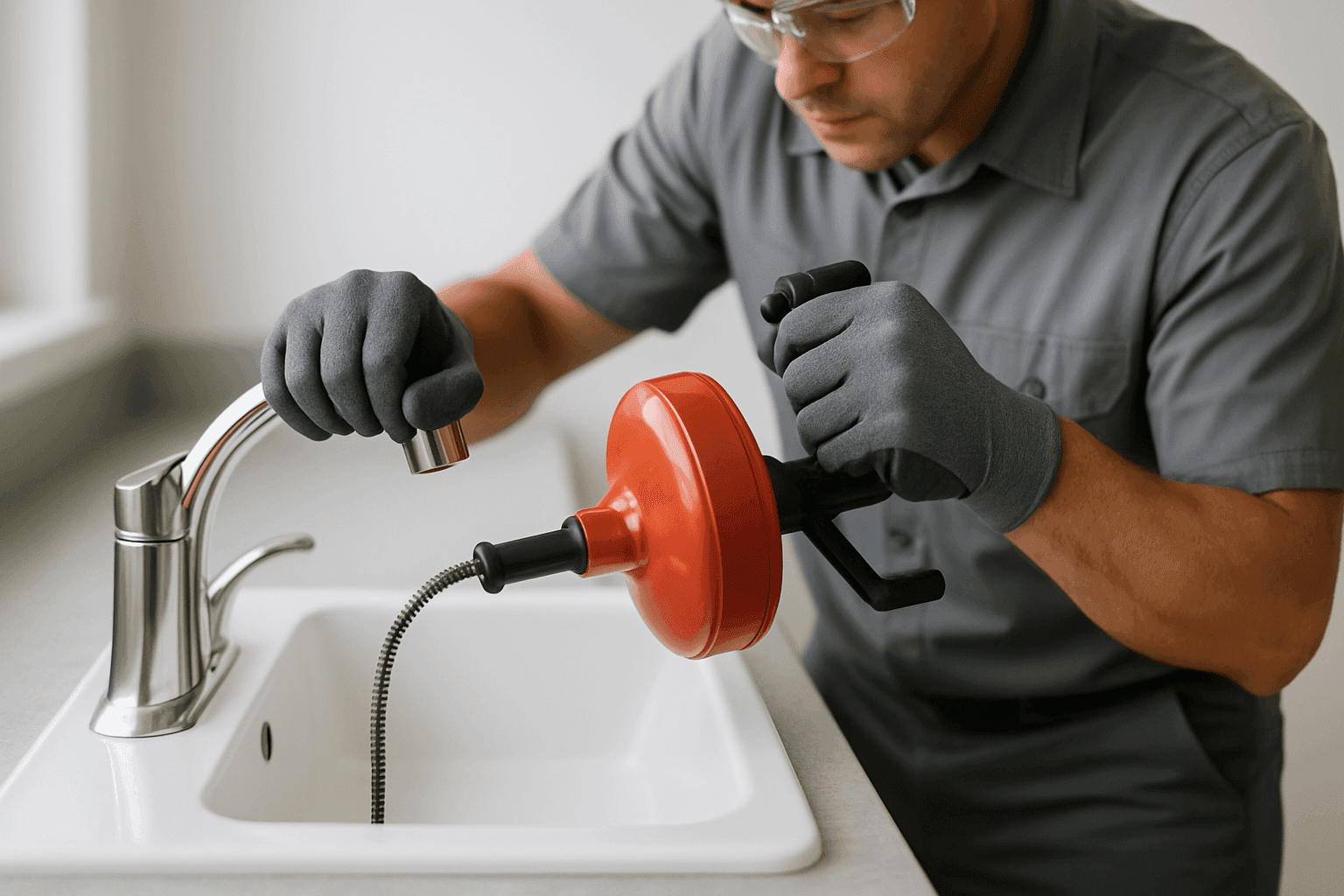
Drain Snake (Plumber’s Auger)
If plunging doesn’t work, it’s time for a snake—a flexible metal cable that winds through bends and traps.
- Feed the snake into the drain slowly.
- Twist and push gently until you feel resistance.
- Rotate and pull back—you’re fishing for the clog.
- Run hot water to flush broken-up debris.
Snakes are great for hair and soap scum, but not for solid objects or deep blockages.
Eco-Friendly Solutions
Skip the harsh chemicals and try these:
- Baking Soda & Vinegar: Pour 1/2 cup baking soda, then 1 cup vinegar, down the drain. Let it fizz for 15 minutes. Flush with hot water.
- Boiling Water: For minor grease or soap buildup, pour boiling water in stages. Never use on PVC pipes (it can warp them).
These methods are gentle on pipes and better for the environment.
What Not to Use ⚠️
Some store-bought solutions promise quick fixes, but they can do more harm than good.
- Chemical Drain Cleaners: Most contain lye or sulfuric acid. They can eat through clogs—but also through your pipes, especially older metal or PVC.
- Wire Hangers: Uncoiling a hanger can scratch pipe walls or get stuck, making things worse.
- Pressure Devices: High-pressure air or water gadgets can blow out pipe joints or push clogs deeper.
According to the EPA and manufacturer guidelines, repeated use of harsh chemicals can lead to expensive pipe repairs and unsafe home plumbing. When in doubt, choose mechanical or eco-friendly options.
When to Call a Pro
Some clogs are just too stubborn—or too risky—for DIY. If you notice any of these signs, it’s time to reach out to Hancock Plumbing for emergency plumbing help:
- Water backs up in multiple fixtures (sink, tub, and toilet at once). This could mean a main sewer line blockage.
- Sewage odors coming from drains—never a good sign.
- Gurgling sounds or bubbling in toilets and drains.
- Standing water that won’t budge after all your efforts.
- Frequent clogs in the same drain.
These symptoms may indicate a deeper issue, such as a broken pipe, tree root intrusion, or a collapsed sewer line. Licensed plumbers use video inspection tools to check pipes from the inside and spot hidden damage, following local plumbing codes.
What Pros Do On Arrival
A professional plumber brings more than a wrench—they bring knowledge, experience, and the right equipment. Here’s what happens when Hancock Plumbing shows up:
- Assessment: We listen to your description, inspect the fixture, and check for water damage.
- Video Camera Inspection: For persistent or deep clogs, we use waterproof cameras to see inside your pipes without digging.
- Mechanical Augers: Heavy-duty drain snakes or power augers break up tough clogs that DIY tools can’t touch.
- Hydro Jetting: For major buildups, a high-pressure water jet scours the pipe walls clean—no chemicals needed.
- Repair or Replacement: If pipes are damaged, we advise on repair or repiping following building codes (like those set by the International Plumbing Code).
We always aim to clear the clog safely, protect your home, and restore full drainage fast.
Prevention & Maintenance 🧰
A little care goes a long way toward clean drains. Here’s how to avoid repeat clogs:
- Install drain screens in sinks, showers, and tubs to catch hair and debris.
- Run hot water weekly through every drain to wash away soap and grease.
- Don’t pour fats or oils down kitchen sinks—they solidify as they cool.
- Brush hair before showering to catch loose strands.
- Flush only toilet paper—no wipes, cotton balls, or dental floss.
- Schedule annual inspections with a licensed plumber—especially in homes with older pipes or hard water.
Some homeowners consider water filtration systems to reduce mineral buildup. Hancock Plumbing can help with installation and maintenance.
Costs & Time Factors
How much—and how long—does drain cleaning take? It depends on the clog and the method.
- DIY methods: Plunging or snaking a sink or tub can take 15–30 minutes and cost little more than a few household items.
- Professional service: Most routine clogs are cleared in under an hour, but deeper problems (like main line blockages) take longer and may require specialized equipment.
- Major repairs: Pipe replacement or sewer line repair is more involved and may require permits or excavation, depending on local codes.
Fixing a small clog early usually costs less and prevents bigger, pricier emergencies.
When It’s an Emergency 🚨
Some situations can’t wait. If you have:
- Flooding or standing water that threatens your home or belongings
- Sewage backup (anywhere)
- A sudden leak under sinks, behind walls, or at the base of toilets
- Burst pipes (especially in winter)
Don’t wait or try to fix it yourself. Emergency plumbing service from Hancock Plumbing is available day and night. Fast action reduces damage and keeps your family safe.
FAQ: Drain Cleaning & Clogs
Q: What causes recurring clogs in my bathroom sink?
A: Hair and soap scum are the usual suspects. If clogs keep returning even after cleaning, the problem may be deeper in the pipes or related to hard water buildup.
Q: Are “flushable” wipes really safe for toilets?
A: Despite the name, most “flushable” wipes don’t break down like toilet paper. They can block pipes and cause sewer backups.
Q: How do I know if a clog is in my main sewer line?
A: If more than one fixture backs up at the same time (like the shower and toilet), or you smell sewage, you may have a main line clog. This requires a professional assessment.
Q: Can I use boiling water for all drains?
A: Boiling water helps with grease and soap, but it can warp PVC pipes. Use hot tap water for plastic plumbing and boiling water only for metal pipes.
Local & Seasonal Considerations
In many homes, hard water is a silent enemy. It leaves a limescale crust inside pipes, making clogs more likely. If you notice white stains around faucets or a chalky feel on tiles, you may have hard water. Water softeners and regular maintenance can help.
During autumn, falling leaves and yard debris can infiltrate outdoor drains, especially if your home has older sewer lines. In winter, pipes can freeze and burst, sometimes causing unexpected blockages.
Hancock Plumbing is ready for every season—whether it’s a holiday weekend or the dead of night. Our licensed team handles everything from water heater repair near you to bathroom and kitchen plumbing emergencies.
Got a clog you can’t handle? Not sure if it’s a quick fix or the start of something bigger? Call Hancock Plumbing now — or reach us anytime at 866-565-8061 .